Reimagining Education with Say.Run
How an educator used AI orchestration to transform live learning — cameras on, engagement up, and a classroom that finally felt like a room.
Executive Summary
Education has always been about timing — when to ask, when to pause, when to push. But in virtual classrooms, timing is lost to lag, distractions, and static slides.
This case study explores how Say.Run, the live multiplayer experience platform, reshaped a real university seminar into a live, responsive learning experience — a human educator co-presenting with an AI Director, and a classroom that felt like a shared stage.
Our subject: Dr. Maya Elston, an educator in psychology and leadership studies. Her goal was to convert her "Human Dynamics in Teams" course into a hybrid workshop that would keep students engaged, emotionally attuned, and visually immersed — even over video.
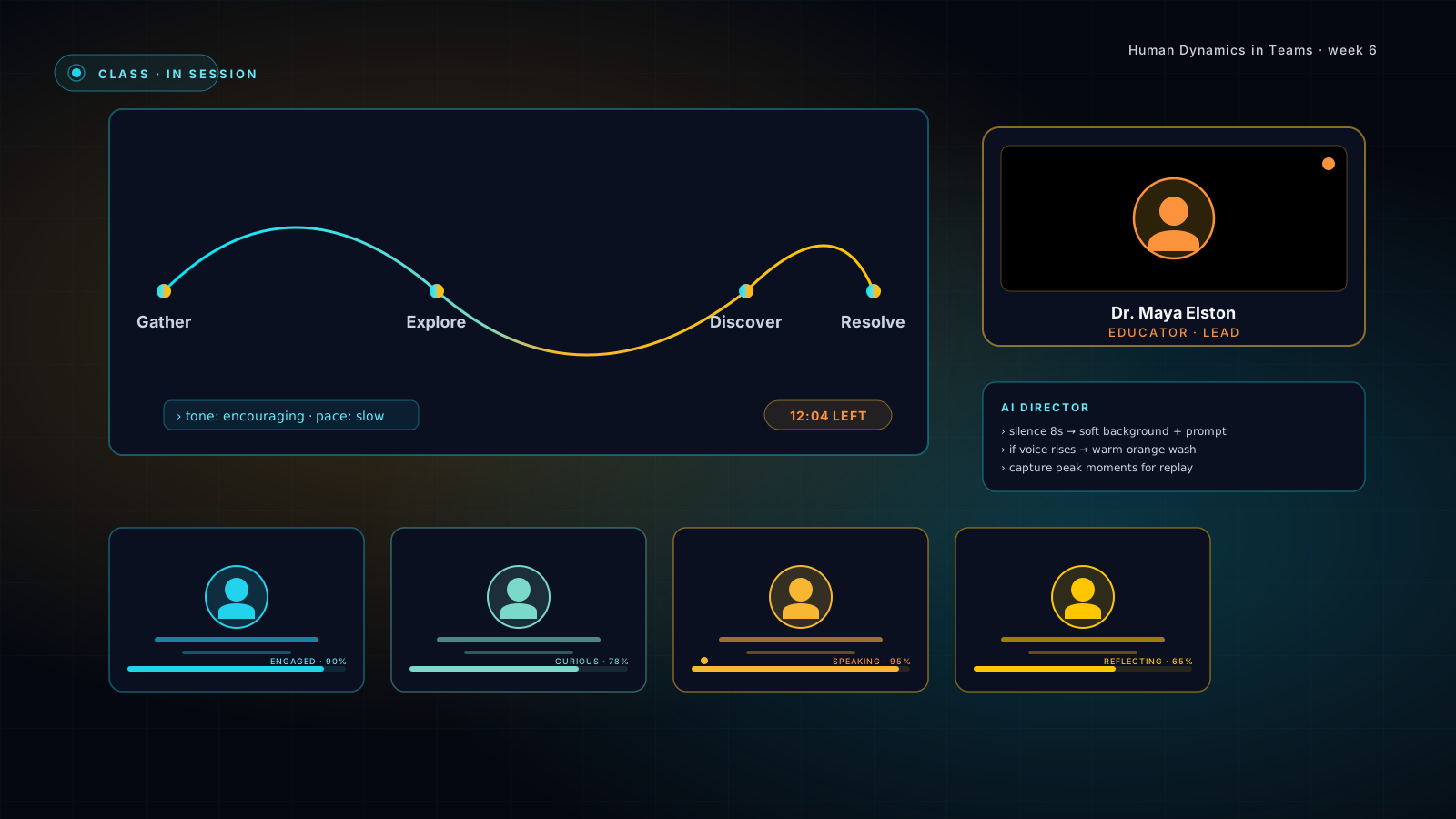
The Challenge: Fragmented Presence, Fading Energy
Before Say.Run, Dr. Elston's virtual sessions looked like most online classes:
- Students kept cameras off.
- Engagement dipped after 20 minutes.
- Discussions felt mechanical, with poor transitions between group work and reflection.
- Visuals and slides rarely matched the tone or emotional arc of the discussion.
Her comment before adopting Say.Run captured it perfectly:
"Teaching online felt like driving a car through fog — I could speak, but I couldn't feel the room."
The Solution: Say.Run as an Orchestration Layer
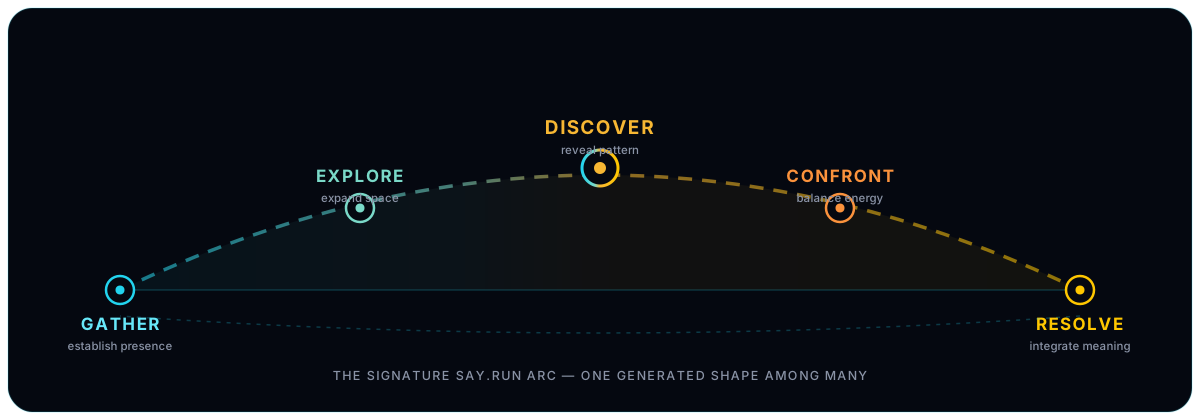
Say.Run provided a guided stage — an invisible director synchronizing visuals, timing, and pacing across every participant's device. Instead of presenting slides, Dr. Elston built a scene manifest — a structured flow of moments and emotional beats:
- Gather — Students arrive; lighting shifts from cool blue to warm orange, signaling readiness.
- Explore — Voice-driven polls appear on screen: "What does trust feel like in a group?"
- Discover — Visualize shared experiences in real time.
- Confront — Voices rise; camera focus shifts between speakers as debate intensifies.
- Resolve — Lighting softens; summaries and reflections appear as floating text.
Each phase was deterministically synchronized across iPhones, iPads, and Macs. When one student laughed, the ambient visuals subtly brightened for everyone — a small but powerful reinforcement of shared mood.
The Process: How It Worked in Practice
1. Preparation
Using Say.Run's iOS Control Center, Dr. Elston defined her 45-minute session:
- Scripted her storyline in plain language.
- Selected transitions, lighting, and overlays from the visual registry.
- Added triggers like "if silence > 8 seconds, fade to soft background and display reflective prompt."
No coding, no templates — just intention expressed through words.
2. Execution
As students joined, Say.Run took over the logistics:
- The Sync Fabric kept all devices in perfect visual and temporal alignment.
- The AI Director read tone and timing cues through voice analysis.
- The Scene Composer adapted visuals dynamically — slides replaced by living environments.
Midway through, when one student shared a personal story about failure, Say.Run recognized the tonal shift and gently dimmed backgrounds across all screens — prompting a moment of empathy and silence.
3. Reflection and Insights
After class, Say.Run generated an engagement map:
- Emotional peaks (moments of laughter or tension).
- Speaking time distribution.
- Key phrases extracted and grouped by theme.
- Visual playback showing how tone influenced transitions.
Dr. Elston used this for continuous improvement — refining pacing, prompts, and transitions week by week.
The Results
| Metric | Before Say.Run | After Say.Run |
|---|---|---|
| Average student camera-on rate | 42% | 91% |
| Average engagement time (speaking + reactions) | 17 min | 37 min |
| Emotional consistency (self-reported focus) | 3.2 / 5 | 4.8 / 5 |
| Qualitative feedback | "Lecture-like" | "Felt like we were on stage together." |
"Say.Run gave my students a shared sense of tempo and meaning. It wasn't a class anymore — it was an experience." — Dr. Maya Elston, Leadership Faculty, Atlantic University
Broader Implications: Education as Performance
Say.Run's framework reveals a new model of digital education:
- People — Stay expressive, spontaneous, and human.
- Process — Structured as narrative, not checklist.
- Technology — Acts as conductor, not performer.
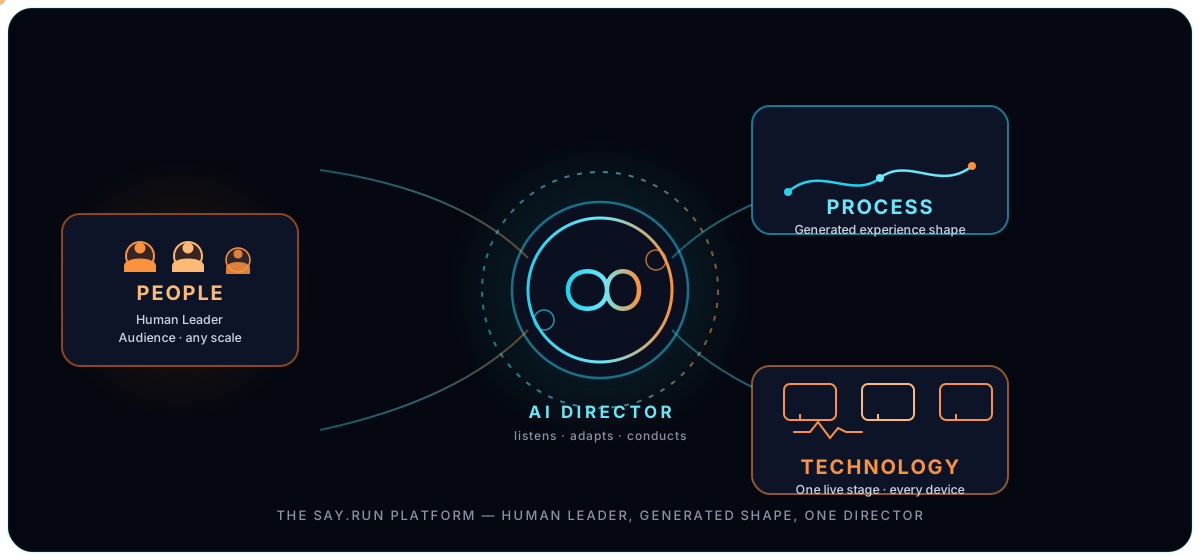
Instead of digitizing classrooms, Say.Run re-humanizes them — translating the implicit art of facilitation into visible, coordinated motion. Teachers become directors. Students become co-performers. Learning becomes cinematic — precise, emotional, and alive.
Conclusion
Say.Run is not a conferencing tool; it is a learning experience engine. It turns educational sessions into orchestrated storylines — where timing, tone, and emotion are as important as content.
Dr. Elston's case shows what happens when human guidance meets deterministic design: technology fades into the background, and teaching regains its rhythm.
Say.Run — where learning becomes a living performance. For educators who want their classrooms to feel as alive as the ideas they teach.