Extending Performance Beyond the Stage
How a theatre troupe turned post-show silence into a living dialogue — and kept the audience part of the cast.
Executive Summary
Performers spend months rehearsing for moments that last minutes. When the curtain closes, connection fades — not because audiences lose interest, but because there's no shared stage between performances.
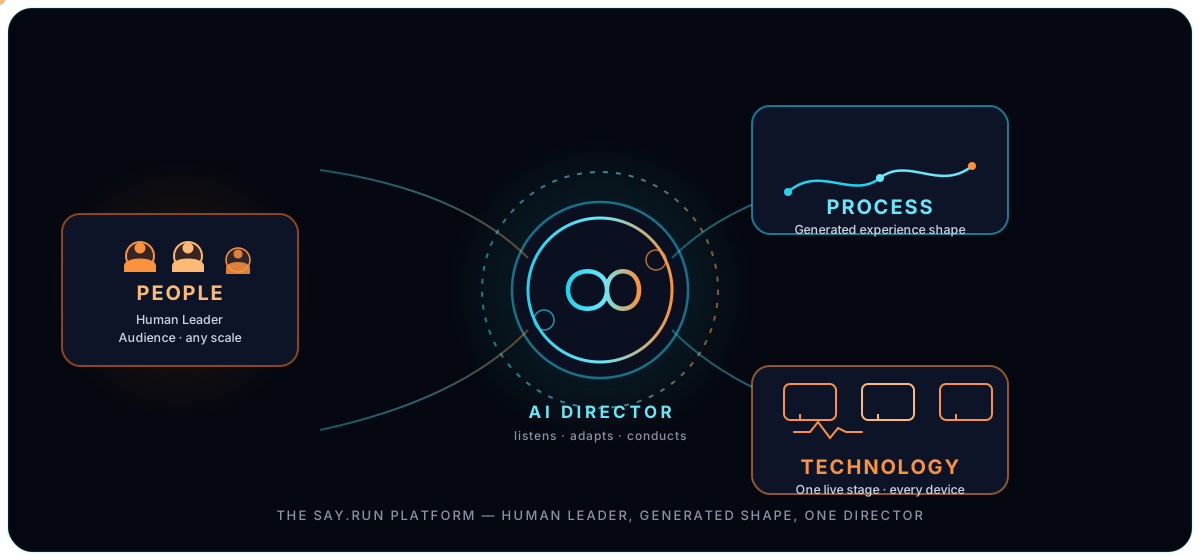
This case study explores how Say.Run, the live multiplayer experience platform, helped a small theatre troupe — The Aurora Ensemble — turn post-show silence into a living dialogue. A human director and an AI Director co-presented a shared stage their audience could enter from anywhere, transforming engagement into an interactive, cinematic experience that extended far beyond the physical theatre.
The Challenge: The Vanishing Afterglow
After each show, The Aurora Ensemble wanted to connect with their audience — gather feedback, build anticipation for the next performance, and share behind-the-scenes reflections. But traditional tools felt disconnected from their art form:
- Social media posts felt flat.
- Livestreams lacked structure or intimacy.
- Email newsletters went unopened.
As director Elena Campos put it:
"The performance was alive, but our audience experience afterward felt like paperwork."
They needed a medium that could carry the emotional tone of live theatre — without diluting its magic.
The Solution: Say.Run as a Living Curtain Call
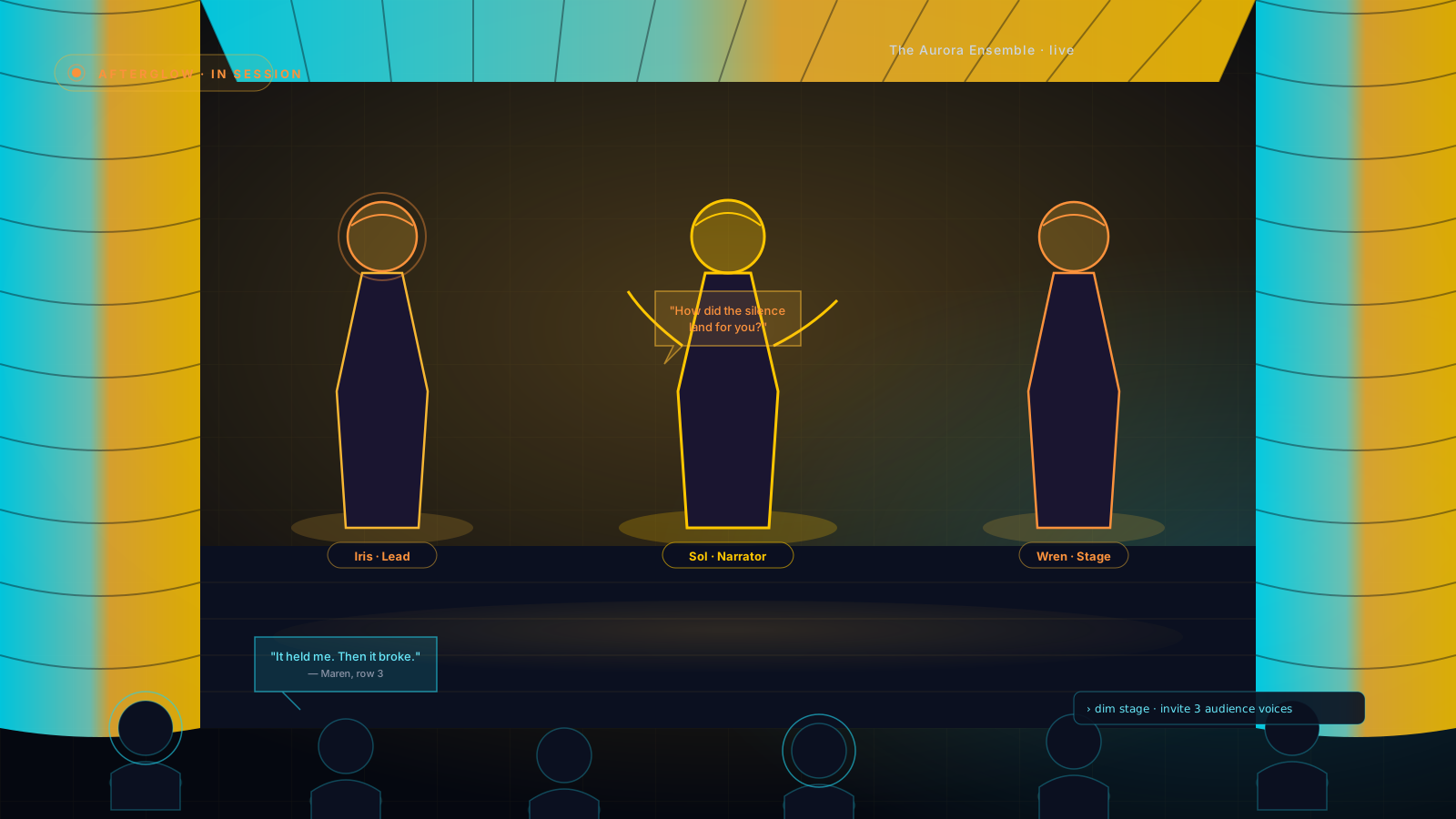
Say.Run gave the troupe a digital stage that could breathe with their story. After each performance, Elena used the iOS Control Center to launch a "Living Recap Session" — a guided, interactive experience hosted entirely through Say.Run.
The Setup
Each actor had a Say.Run presence page — a hybrid of a voice portal and interactive performance space.
- Fans could call in or join a visual room that mirrored the show's atmosphere.
- Lighting, music, and background motion reflected the play's emotional palette.
- Actors could appear live or pre-record responses that the AI Director blended seamlessly into the flow.
The Process: How It Worked in Practice
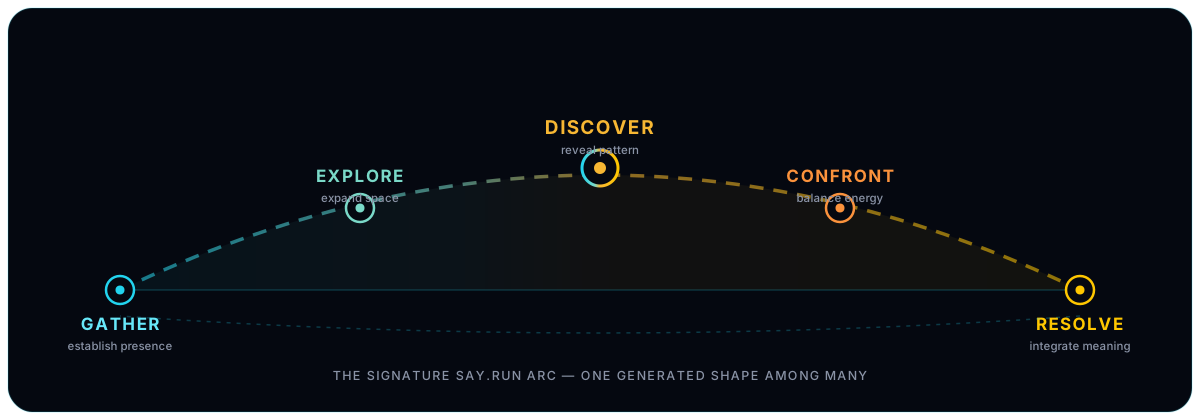
1. The Gathering — The Digital Lobby
As fans joined, Say.Run synchronized ambient sound and warm lighting across all devices. A voice prompt greeted each viewer: "Welcome back to Aurora. The story continues…" Visuals appeared beside each fan's name, showing their favorite scene or moment.
2. The Exploration — Behind the Curtain
Actors entered the live feed from their iPhones, casually sharing anecdotes. As each spoke, Say.Run automatically adjusted framing and brightness, spotlighting the speaker — recreating a sense of stage lighting. Audience members could respond by voice or emoji-style gestures that floated across the screen in real time.
3. The Discovery — The Emotional Thread
When someone mentioned a powerful scene, Say.Run generated a replay vignette — a short animated recap of that emotional moment rendered on the spot. It felt less like playback and more like a memory resurfacing together.
4. The Confrontation — The Dialogue
Fans asked difficult questions about creative choices or character arcs. Say.Run shifted tone: darker background, focused framing. The conversation deepened — this was no Q&A; it was theatre as conversation.
5. The Resolution — The Shared Bow
As the session ended, lighting faded gently to soft gold. The AI Director summarized highlights: laughter peaks, most discussed moments, and quotes from fans. Everyone received a personal recap link — a visual memory of the evening that could be revisited or shared.
The Results
| Metric | Before Say.Run | After Say.Run |
|---|---|---|
| Audience retention between shows | 34% | 78% |
| Average session time in post-show discussions | 9 minutes | 41 minutes |
| Social engagement conversion (show → Say.Run session) | 11% | 56% |
| Emotional recall (surveyed next week) | 2.9 / 5 | 4.7 / 5 |
"It felt like we were still on stage — but the audience was part of the cast." — Elena Campos, Artistic Director, The Aurora Ensemble
Why It Matters: The Performance Never Ends
Theatre thrives on presence — and Say.Run extends that presence into the digital world. It gives performers a new kind of encore: one that lives between shows, fueled by emotion, voice, and real-time orchestration.
For actors, this means:
- Turning audience engagement into art.
- Preserving the emotional arc of a performance long after closing night.
- Building loyalty through shared, interactive memory.
For audiences, it means:
- Feeling like co-creators instead of spectators.
- Staying part of a story that keeps unfolding, even after the curtain falls.
Conclusion
Say.Run bridges the gap between performance and participation. It transforms the "after-show void" into a living narrative — one that continues to evolve through voice, visuals, and shared emotion.
The Aurora Ensemble proved that digital theatre doesn't need to compete with live performance — it can extend it. And for artists like Elena Campos, Say.Run isn't a platform. It's a stage that never goes dark.
Say.Run — where performance becomes perpetual. Every story continues, every audience stays connected, and the show — somehow — goes on.